
When the clinical community redraws the boundaries of a disease, what do gene–disease and variant–disease associations say about where those boundaries sit? We tested PCOS’s new name with genetic evidence in DISGENET.
In May 2026, polycystic ovary syndrome got a new name. Polyendocrine metabolic ovarian syndrome, or PMOS, was announced in The Lancet after a global consensus process that drew on 14,360 survey responses from people with the condition and health professionals, with 56 academic, clinical and patient organizations involved.
The case for change was straightforward. “Polycystic” is inaccurate: arrested follicles are common, but pathological ovarian cysts are not increased. And a name built around one organ hides a condition that affects about one in eight women and spans endocrine, metabolic, reproductive, psychological and dermatological features. The authors link the old name to delayed diagnosis, fragmented care, stigma and inconsistent research coding.
A change in disease classification raises an important question: does the genetic evidence reflect this broader understanding?
We used DISGENET to investigate the genetic evidence behind PCOS, exploring how disease, phenotype, gene, and variant associations connect. DISGENET brings together structured, evidence-ranked genotype–phenotype knowledge, allowing users to move beyond individual disease associations and investigate the supporting evidence.
Why PCOS Became PMOS
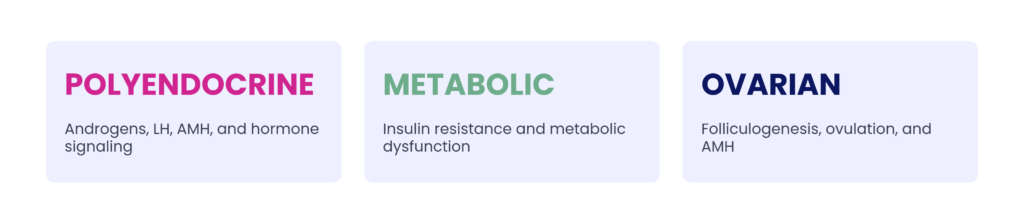
The authors chose each word in the new name to reflect underlying biology:
- Polyendocrine covers androgen excess (ovarian and often adrenal), altered LH pulsatility, and altered AMH, adipokine, and gut-hormone signaling.
- Metabolic covers insulin resistance, reported in about 85% of people with the condition and in about 75% of lean women.
- Ovarian covers disordered folliculogenesis, ovulatory dysfunction and elevated AMH, now an adult diagnostic criterion.
The paper also notes that genomic meta-analyses point to polygenic origins across neuroendocrine, metabolic and reproductive pathways. That is a claim we can test against the evidence.
Testing the New Name of PMOS Against Genetic Evidence
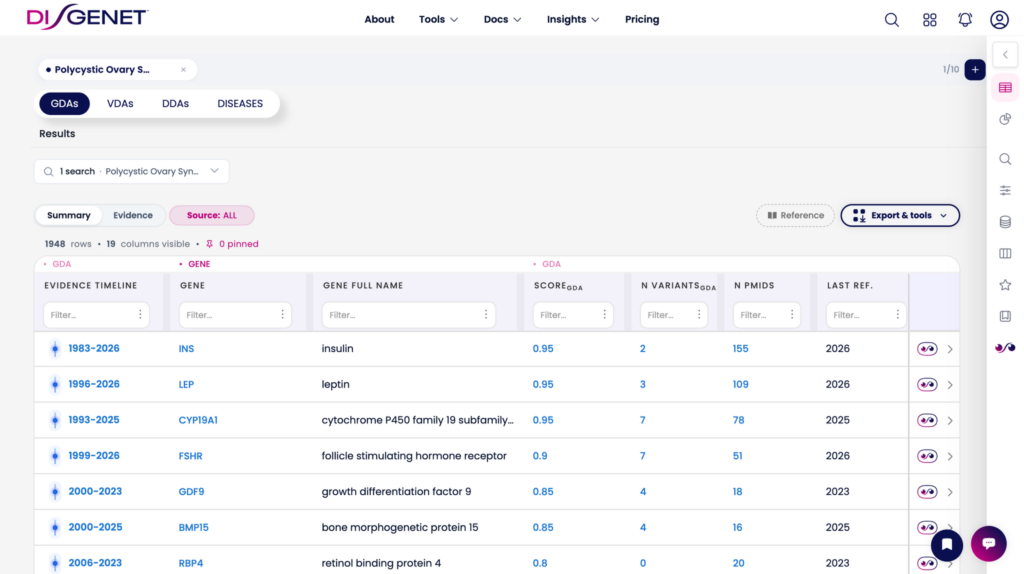
We started with PCOS (UMLS C0032460), which has 1,948 associated genes in DISGENET. Each disease is mapped to a standard UMLS identifier, so different names for the same condition can be linked to a single disease concept.
We then identified 26 phenotypes described in the consensus paper and mapped them to DISGENET concepts, grouping them into five feature groups: endocrine, metabolic, reproductive, dermatological, and psychological.
Measuring shared genetic associations
For each pair, we measured gene overlap with the Jaccard index: the share of genes two conditions have in common, out of all the genes linked to either. We ran the same comparison for asthma and endometriosis as controls. Every overlap reported here is significant at p < 10⁻⁶.
Gene overlap spans all five feature groups
Gene overlap was observed across all five groups, with insulin resistance showing the strongest overlap (0.29). The cards show the headline results, sorted by overlap.
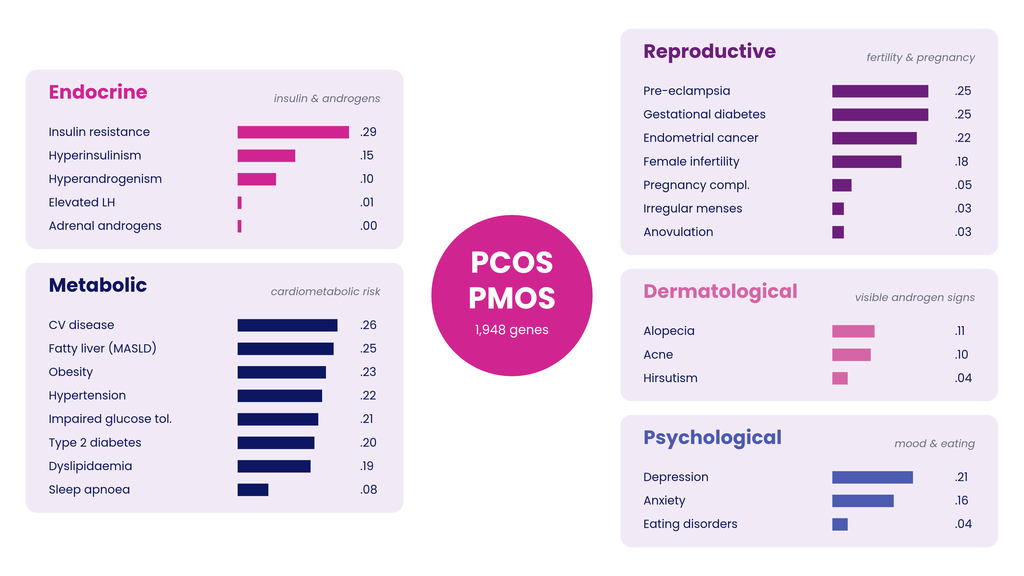
The strongest overlaps are with metabolic and pregnancy features, not with the ovary alone. That is what a polyendocrine, metabolic name would predict.
When we ran the same comparison for the controls, the pattern looked similar. Asthma shares as many genes with cardiovascular disease and obesity as PCOS does.
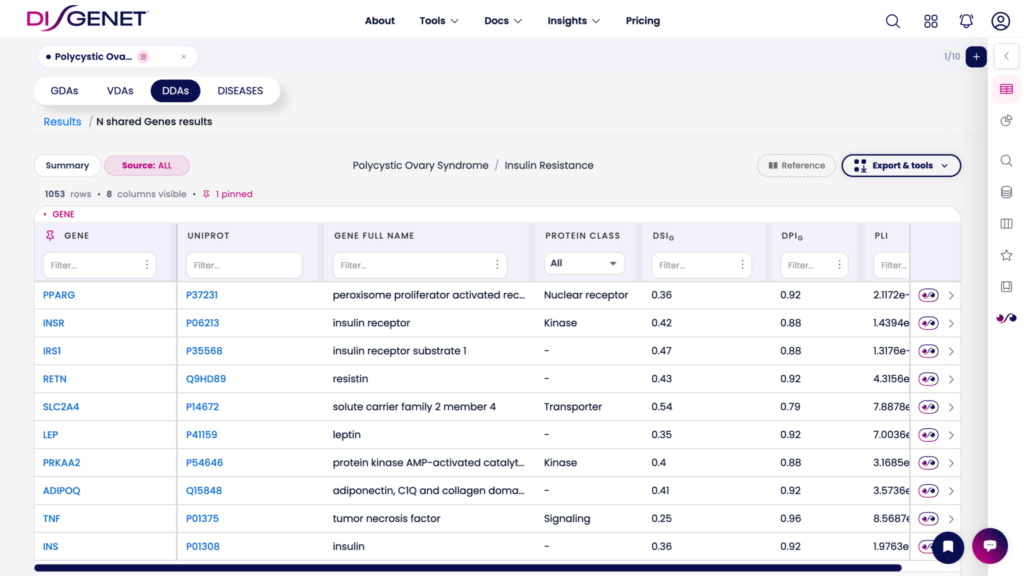
The reason is that well-studied hubs such as TNF, IL6, and LEP connect almost every pair of diseases, and large gene sets overlap with everything. A high overlap on its own is not evidence that a feature belongs to a condition.
To focus on associations with stronger supporting evidence, we used the DISGENET score to filter the PCOS gene set. This score reflects the evidence supporting a gene–disease association, drawing on information from publications and different evidence sources. Higher scores indicate stronger supporting evidence.
We retained genes with a DISGENET score of at least 0.35 (263 genes) for the next stage of the analysis. This threshold was selected to focus on associations with sufficient evidence for further investigation.
Which Genes Connect the Features of PMOS?
Among these 263 genes, we identified those associated with phenotypes across two or more feature groups. Fifty-five genes qualified as connectors. Fifteen of them are not linked to asthma or endometriosis at all.
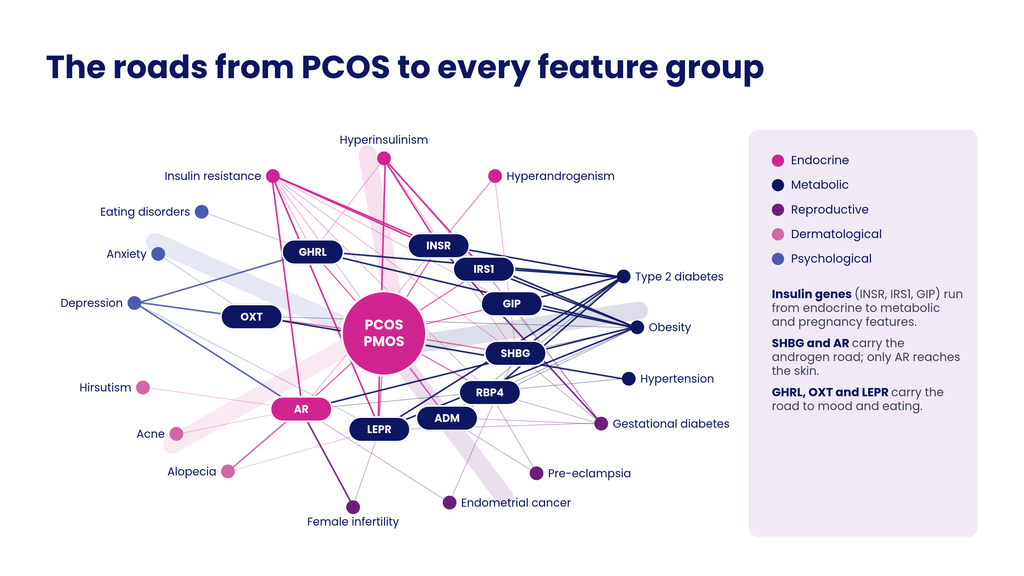
Several genes appear in more than one group. Insulin genes (INSR, IRS1, GIP) run from endocrine through metabolic to pregnancy features. SHBG ties insulin resistance to hyperandrogenism, and AR carries the androgen route all the way to the skin; apart from inflammatory hubs, it is the only gene that does. GHRL, OXT and LEPR carry the route to mood and eating. LEPR, INSR, RBP4, GHRL and AR sit where the groups meet. Together, these genes illustrate how associations can connect different feature groups rather than remaining confined to a single phenotype.
Moving from genes to variants
Gene-level overlap is a coarse measure, because one gene can carry many variants and many associations. At variant level, the picture becomes clearer. Compared with the average of the two control diseases, PCOS shares about 14 times more variants with insulin resistance (77 shared variants), about 10 times more with fatty liver disease, and about 9 times more with acne. Depression (6.8×), anxiety (5.9×), and pre-eclampsia (5.3×) also stand out. The signal spans endocrine, metabolic, reproductive, psychological, and skin features.
Not every feature is specific. Classic cardiometabolic endpoints such as type 2 diabetes and hypertension are not, because large biobank GWAS dominate those overlaps and are shared with the controls too.
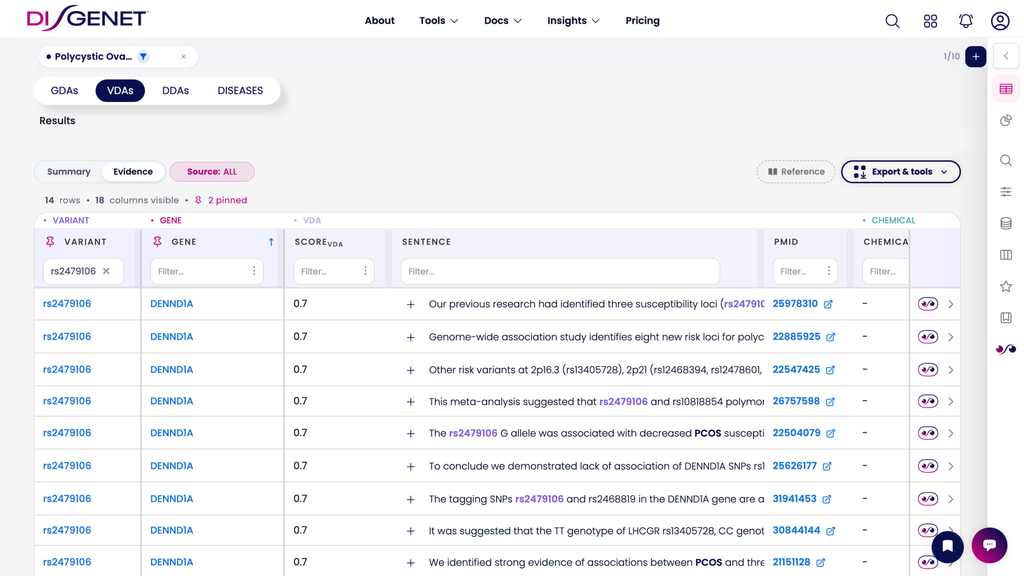
The variant view also shows where evidence is still thin. PCOS GWAS loci such as DENND1A (rs2479106), THADA (rs13429458) and INSR (rs2059807) score 0.70, 0.70 and 0.60 for PCOS in DISGENET, but only 0.10 for insulin resistance, with one insulin-resistance paper each. Classic metabolic variants such as FTO, PPARG, TCF7L2 and IRS1 score 0.30 on both sides because they are well studied in both fields.
Those thin links are not a weakness of the analysis. They are testable hypotheses rather than settled biology, and they are exactly the kind of lead a target discovery team wants to find.
AMH: When Evidence Builds Before Classification Catches Up
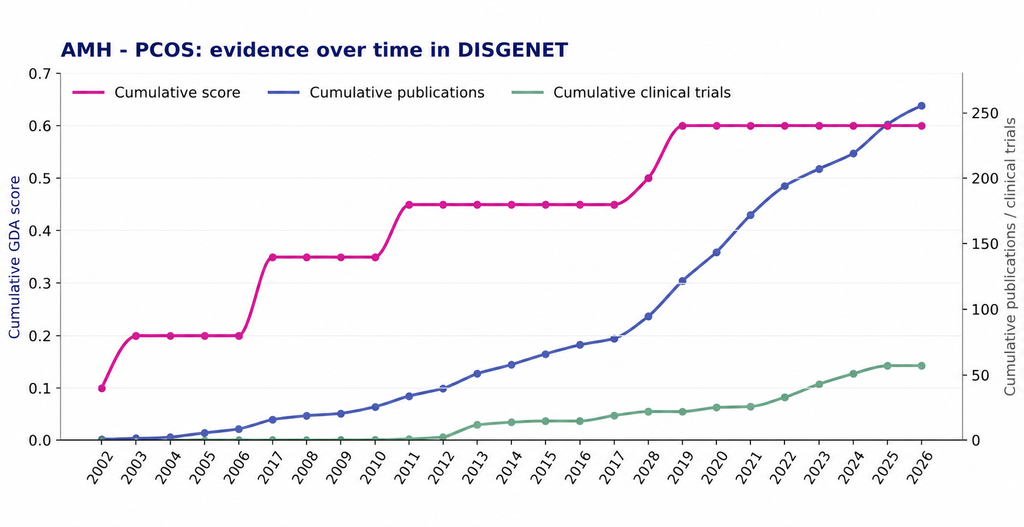
AMH is a useful example of how evidence and classification move at different speeds. Elevated AMH became part of the adult diagnostic criteria only recently, but evidence linking AMH to PCOS has been building for two decades. Its DISGENET score was 0.35 in 2010, 0.45 by 2017, and 0.60 today. That reflects 255 publications, evidence from rat models, and 57 clinical trials.
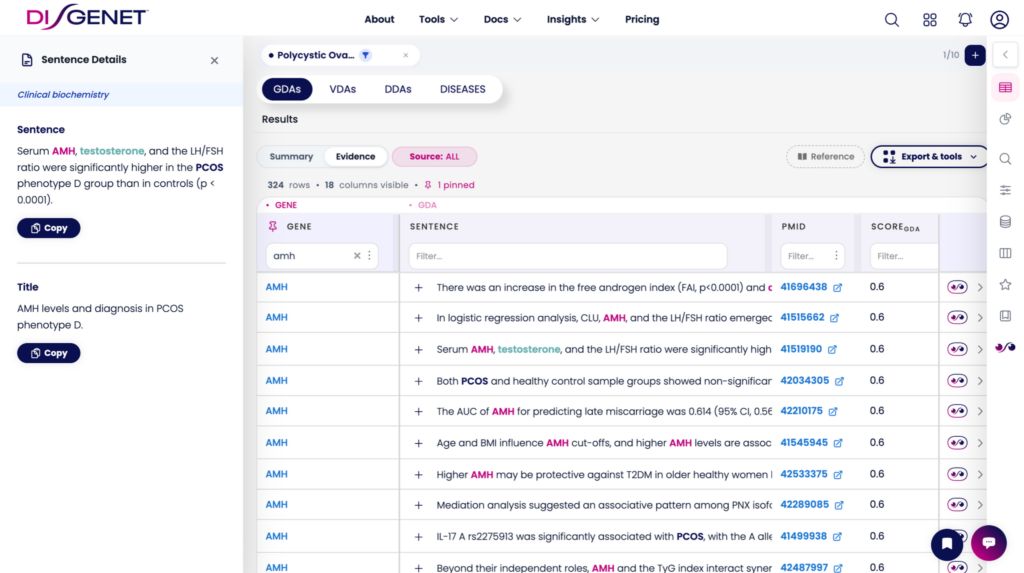
Tracking how an association’s evidence develops over time provides another way to assess how well established a relationship is and where further investigation may be warranted.
What This Means for Target Discovery and Women’s Health R&D
The PCOS-to-PMOS name change reflects a broader understanding of the condition. Our investigation shows how exploring the genetic evidence behind a disease can reveal relationships that aren’t immediately apparent from its clinical label.
For teams working in target discovery and women’s health R&D, there are several useful takeaways:
- Look beyond the primary diagnosis. Explore associated phenotypes to investigate the wider biology of a condition.
- Investigate connections across phenotypes. Shared genes can highlight relationships worth exploring, although overlap alone does not establish disease specificity.
- Move beyond gene-level associations. Variant-level evidence can provide a more detailed view of the genetic relationships involved.
- Follow the supporting evidence. Investigate the publications and sources behind individual associations to understand how well supported they are.
Investigate Beyond the Disease Label
DISGENET brings together structured, evidence-ranked genotype–phenotype knowledge, helping users explore the relationships between diseases, phenotypes, genes and variants, and investigate the evidence behind individual associations.
Whether you’re exploring a newly reclassified condition like PMOS or investigating an established therapeutic area, these connections can help you ask better questions and develop more informed hypotheses.
And we’re taking this further. In our upcoming release in December 2026, we’re introducing new ways to explore phenotype relationships across biological scales and investigate the connections between genes and diseases.