-
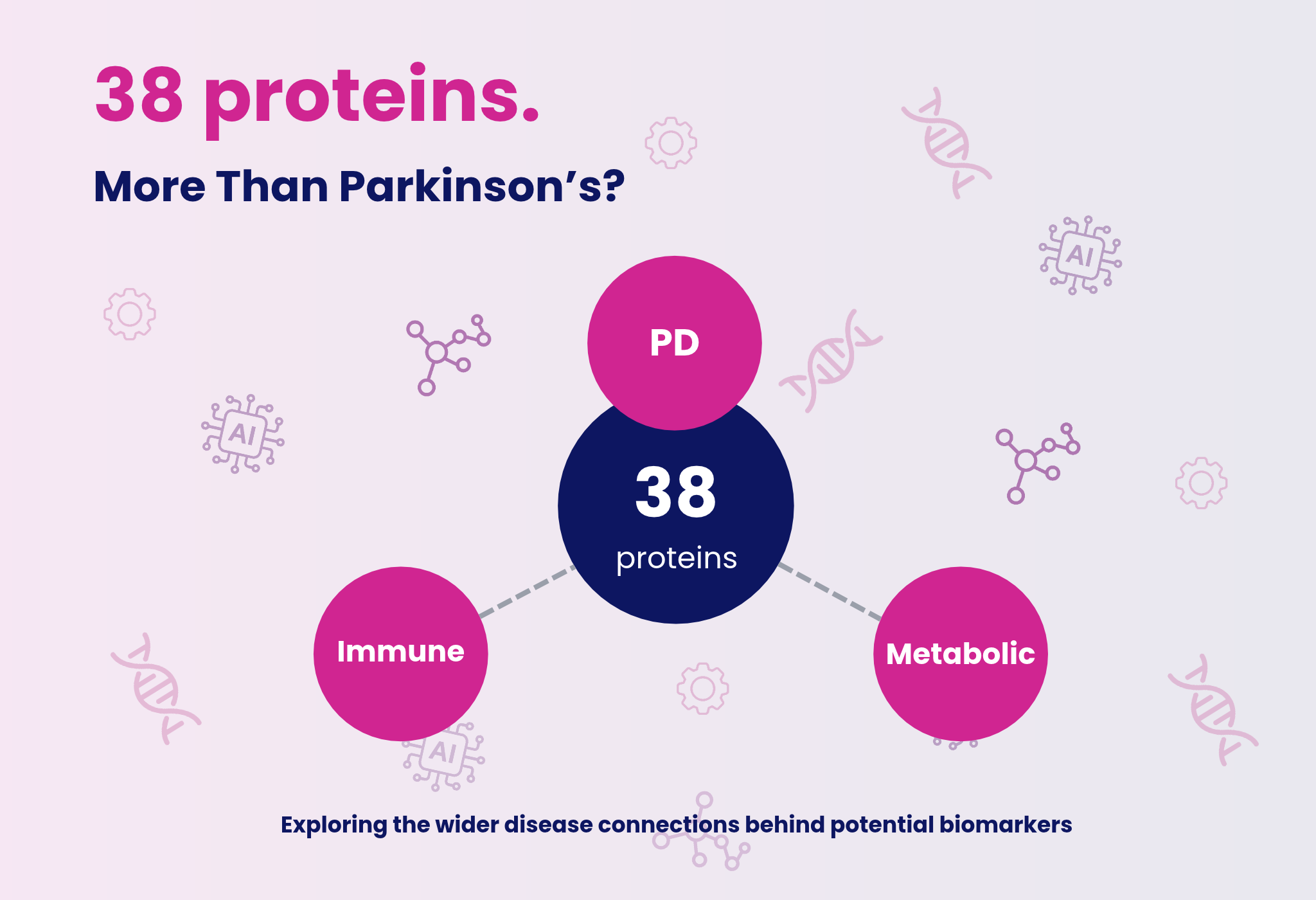
Potential Biomarkers for Parkinson’s Disease: What Else Could They Reveal?
What if a blood test could identify people at increased risk of Parkinson’s disease years before diagnosis? Large-scale proteomics studies are bringing that possibility closer. But when we explored 38 proteins associated with future Parkinson’s disease, their strongest disease associations turned out not to be neurological at all. In 2025, Gan and colleagues published a […]
-

Evidence Through Time: What’s New in DISGENET v26.2
In this article, we cover: Scientific knowledge doesn’t arrive fully formed. It accumulates — study by study, source by source, year by year. The question isn’t just what the evidence says today, but how it got there, and how confident you should be at any point in that journey. DISGENET v26.2 is built around that […]
-

From Data to Decision: What’s New in DISGENET v26.1
Full Traceability: Know Exactly Where Every Association Comes From In research and drug discovery, the source of an association matters as much as the association itself. Provenance — the ability to trace each gene–disease or variant–disease association back to its original database, publication, or evidence type — is what transforms a data point into a […]
-

Choosing the Right Target: Lessons from FDA-Approved Drugs in 2025
Author: Janet Piñero Why Target Selection Matters Target selection remains a key determinant of success in pharmaceutical R&D, as efficacy and safety issues continue to drive late-stage failures. In 2025, the FDA approved 46 drugs, including 38 protein-targeted therapies and three mRNA-based treatments, providing a real-world snapshot of which targets actually reach the finish line. […]
-

Understanding DSI and DPI: Key Metrics for Interpreting Gene–Disease Associations in DISGENET
In this article, we cover: As genomic data continues to expand, interpreting the scope of gene–disease associations has become increasingly important. Within DISGENET, two metrics help bring this clarity — Disease Specificity Index (DSI) and Disease Pleiotropy Index (DPI). These metrics provide important context when exploring gene–disease and variant–disease relationships. This article explains what they […]
-

Mapping the Genes Behind Epilepsy: How DISGENET Bridges Clinical Panels and Discovery
Epilepsy affects more than 65 million people worldwide. Genetics plays a key role in understanding and managing the disorder, and genetic testing has become a powerful diagnostic tool — studies show that up to 75% of patients experience improved outcomes after receiving a genetic diagnosis. For clinical genomics and R&D teams, the issue isn’t a […]
-

Accelerating Drug Discovery and Repurposing with Gene–Disease Data and NLP
In modern drug discovery, gene–disease associations for drug discovery are critical for identifying promising targets and repurposing opportunities. DISGENET leverages NLP in drug discovery to extract and structure genetic and variant information from millions of biomedical publications, providing R&D teams with actionable genomic data for target identification and accelerating the path from research to therapeutic […]